
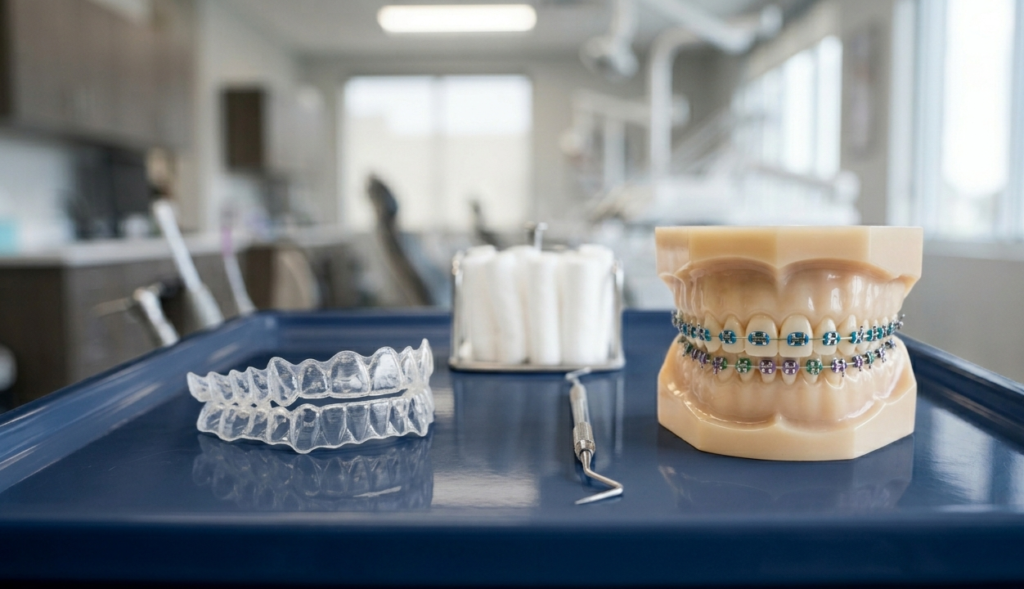
Choosing between Invisalign and traditional braces is one of the most important decisions you’ll make on your orthodontic journey. Both treatments can deliver excellent results, but they differ significantly in cost, comfort, appearance, and lifestyle impact. This guide compares the two options so Ottawa patients can make an informed choice.
Cost Comparison in Ottawa (2026)
Traditional metal braces in Ottawa range from $3,000 to $7,000, while ceramic braces cost $4,000 to $8,000 and lingual braces can reach $8,000 to $10,000. Invisalign typically costs $3,500 to $8,000. For mild to moderate cases, Invisalign is often priced comparably to metal braces and may cost less than ceramic or lingual options. Learn more about pricing details in our Invisalign cost in Ottawa guide.
Insurance coverage is generally the same for both treatments, with most Ontario dental plans reimbursing up to 50 percent of orthodontic costs, typically with a lifetime maximum of $1,500 to $3,500.
Comfort and Daily Life
Invisalign aligners are made from smooth, medical-grade plastic with no sharp edges, wires, or brackets. Most patients report significantly less discomfort than braces wearers, particularly after adjustments. Braces can irritate the cheeks and lips, especially in the first few weeks, and tightening appointments can cause temporary soreness.
Because clear aligners are removable, you can eat whatever you want, brush and floss normally, and remove them for special occasions. Braces require dietary restrictions (no hard, sticky, or chewy foods to avoid when you have braces) and more diligent cleaning around brackets and wires. Knowing how to properly brush and floss your teeth is important with either treatment.
Appearance
This is where Invisalign has a clear advantage. The aligners are virtually invisible, making them ideal for adults and professionals who prefer a discreet treatment. Metal braces are highly visible, ceramic braces are less noticeable but still detectable, and lingual braces are hidden but come with a premium price tag. For patients focused on aesthetics, pairing orthodontic treatment with cosmetic dentistry options afterward can further enhance the final result.
Effectiveness and Treatment Time
Both treatments are highly effective for most orthodontic issues. Braces excel at treating severe or complex cases, including significant rotations and major bite corrections. Invisalign handles mild to moderate malocclusion with equal effectiveness and is continually improving its ability to treat more complex situations.
Treatment time is similar: Invisalign typically takes 6 to 18 months, while braces average 18 to 24 months. Simpler cases may finish faster with either option. If you are unsure about timing, our guide on when is the right age for braces can help with planning.
Maintenance and Compliance
Braces are fixed, which means they’re always working with no compliance required. Invisalign, however, requires wearing aligners 20 to 22 hours per day. If you’re not diligent, treatment can take longer or deliver subpar results. Both treatments require retainers after completion. Keeping up with regular dental cleaning appointments throughout treatment helps protect your teeth and gums.
Which Is Right for You?
The best choice depends on your specific needs, lifestyle, and preferences. Invisalign may be ideal if you want a discreet, comfortable option and have mild to moderate alignment issues. Braces may be better for complex cases, younger patients, or those who prefer a fixed appliance. Understanding what to expect during your first orthodontic consultation can help you feel prepared.
At Orleans Dental Centre, your trusted dentist in orleans, we offer both options and will recommend the treatment that gives you the best result. Contact us or call (613) 824-3888 today to book your consultation.