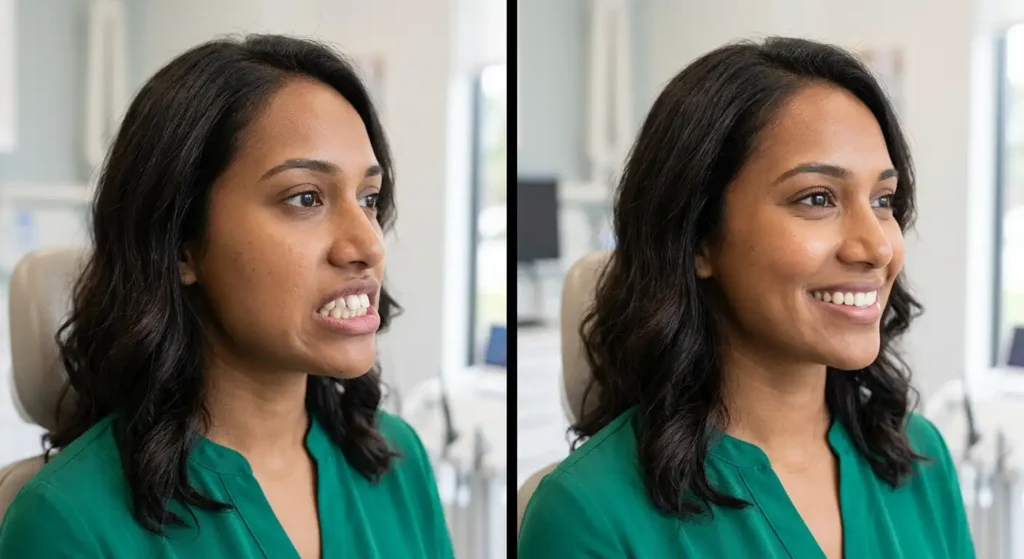
If your teeth do not line up quite the way you would like, or your dentist has used the word malocclusion, you are far from alone. Malocclusion simply means that the teeth or jaws are not aligned properly, and it affects a huge number of people to some degree. The good news is that today’s treatments can correct almost any bite problem, often more comfortably than you might expect.
This guide explains what malocclusion is, the most common types of bite problems, why they matter for your health as well as your smile, and the range of ways they can be fixed. Understanding your options is the first step toward a straighter, healthier bite.
At Orleans Dental Centre, we help Orleans and Ottawa families understand bite problems and find the treatment that fits, from simple fixes to full orthodontic care.
What Is Malocclusion?
Malocclusion is the dental term for a poor bite, meaning the upper and lower teeth do not meet the way they should when your mouth is closed. It ranges from mild crowding that is barely noticeable to more significant misalignment that affects how you chew and speak. Some malocclusion is inherited and some develops over time, but almost all of it can be improved. Because a healthy bite touches so many parts of daily life, from eating to confidence, it is worth understanding rather than ignoring. Dentists classify malocclusion by how mild or severe it is, which helps decide whether a simple fix or a full course of treatment makes the most sense.
Common Types of Malocclusion
Bite problems come in several recognizable forms, and many people have a mix of them. The most common include:
- Overbite, where the upper front teeth cover the lower teeth too far
- Underbite, where the lower teeth sit in front of the upper teeth
- Crossbite, where some upper teeth close inside the lower teeth
- Open bite, where the front teeth do not touch when the back teeth do
- Crowding, where there is not enough room for teeth to sit straight
- Spacing, where noticeable gaps appear between the teeth
None of these is unusual, and each has well-established ways to correct it.
What Causes Malocclusion?
Most malocclusion is simply inherited, passed down along with the size and shape of your jaw and teeth. Childhood habits such as prolonged thumb-sucking or pacifier use can also shift developing teeth, as can the early loss of baby teeth, mouth breathing, or an injury to the jaw. Because some causes begin early, dentists watch a child’s bite closely as they grow, which is one more reason regular visits from a young age are so valuable. Spotting a developing bite problem early sometimes allows gentler, better-timed treatment, and in children it can even help guide the jaw as it grows.
Why Malocclusion Matters, Beyond Looks
A crooked bite is about far more than appearance. Overlapping or crowded teeth are harder to clean, which raises the risk of decay and makes it worth understanding what is gum disease and how to prevent it. Regular teeth cleaning visits and a solid routine for how to properly brush and floss your teeth help protect teeth that are tricky to reach. A poor bite can also wear down enamel unevenly, strain the jaw, and contribute to headaches, so correcting it often improves comfort as much as confidence. In other words, straightening a bite is as much about long-term health as it is about a nicer smile.
How Malocclusion Is Diagnosed
Diagnosing malocclusion starts with a thorough dental check up, where your dentist examines how your teeth meet and looks for signs of wear or strain. Digital dental x rays, and sometimes photographs or scans, reveal the position of the roots and jaw so the full picture is clear. From there, your dentist can explain exactly which type of bite problem you have and the simplest effective way to address it. Because no two bites are identical, this assessment is what turns a general concern into a clear, personalized plan.
How Malocclusion Is Fixed
There is no single fix for every bite, which is good news, because it means treatment can be matched to you. Our Orleans orthodontics team offers a range of orthodontic services, and common options include:
- Clear aligners such as the invisalign orleans patients love, the discreet orthodontics option we offer right here at the clinic
- Traditional braces, the time-tested choice for more complex cases, which we can arrange through a referral to a trusted orthodontist
- Cosmetic options like the veneers orleans patients choose, which can mask very minor misalignment
- Restorative work such as crowns for teeth to rebuild teeth worn down by an uneven bite
- For severe jaw discrepancies, corrective jaw surgery through oral surgery services
Your dentist will help you weigh which approach fits your bite, your age, and your goals.
Caring for Your Teeth During Treatment
Whatever route you take, good habits keep your teeth and gums healthy while your bite improves:
- Clean carefully around aligners or appliances every single day
- Keep up with checkups so your progress stays on track
- Stay on schedule with periodontal maintenance if your gums need extra care
- Report any pain, looseness, or gum disease diagnosis concern promptly
A little diligence now protects the beautiful, healthy result you are working toward.
Book Your Bite Assessment in Orleans Today
You do not have to live with a bite that bothers you, and finding out your options is simpler than most people expect. Whether you need orthodontic treatment or a lighter cosmetic dentist orleans touch, it all begins with a friendly assessment for children, teens, and adults alike across the Orleans and Ottawa area.
Orleans Dental Centre is a family and cosmetic dental practice that has earned the trust of Orleans and Ottawa families for decades, pairing modern technology with a gentle, bilingual, patient-first approach that makes every visit comfortable.
As part of our comprehensive family dental care, we treat bite problems for every age with patience and care. Ready to take the next step? Contact us at (613) 824-3888 or book online to have your bite assessed and your questions answered.