Dental x-rays are one of the most useful tools your dentist has, yet many patients quietly wonder whether all that imaging is safe. It is a fair question, and the reassuring answer is that dental x-rays involve a very small amount of radiation and are considered safe for people of all ages when used appropriately. Understanding how they work can put any lingering worry to rest.
This guide explains what dental x-rays are, exactly how safe they are, why they matter for your health, how often you actually need them, and the precautions that protect you. With the full picture, you can feel confident every time your dentist recommends an image.
At Orleans Dental Centre, we use modern, low-dose imaging and careful safety practices so Orleans and Ottawa patients get the benefits of x-rays with the smallest possible exposure.
What Are Dental X-Rays?
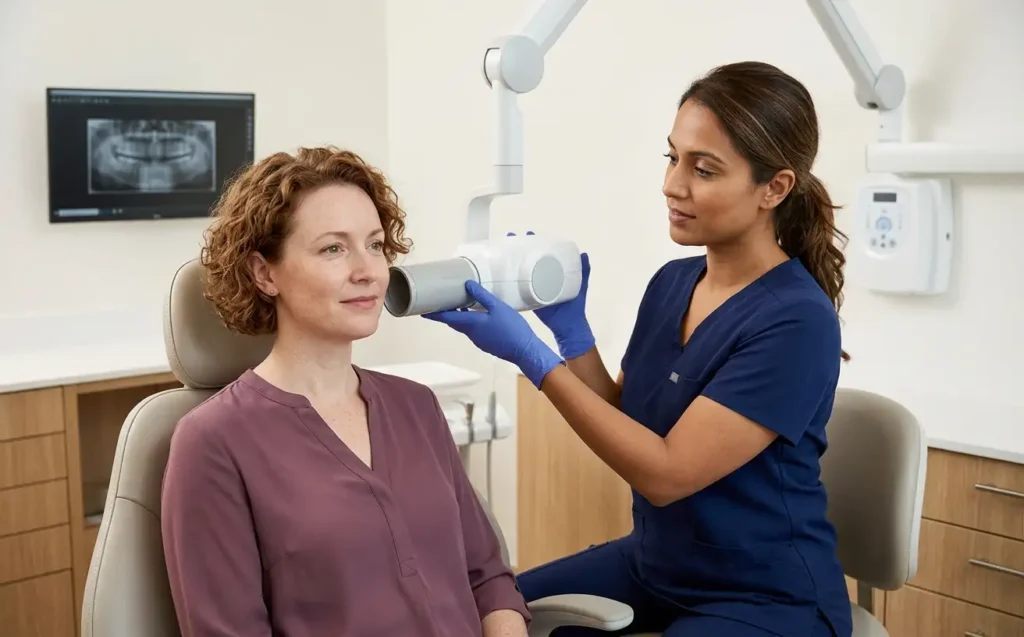
Dental x-rays, sometimes called dental radiographs, are images that let your dentist see beyond the surface of your teeth to areas a visual exam cannot reach. They reveal what is happening between teeth, below the gumline, and inside the bone. Common types include bitewing images that check for cavities between teeth and panoramic images that capture the whole jaw in a single view. You can learn more about how we use dental x rays as part of routine care, where they quietly catch problems long before they become painful or harder to treat. Because they show so much that the eye cannot see, x-rays are a quiet but essential part of a complete exam.
Are Dental X-Rays Safe?
Yes. Dental x-rays use a very low dose of radiation, and modern digital sensors have reduced that dose even further compared with older film. The amount involved in a routine dental image is small, far less than many everyday sources of natural background radiation that we all encounter simply by living on the planet. Dentists are also trained to follow the principle of using the lowest reasonable exposure, taking images only when they will genuinely help your care rather than out of habit. For the vast majority of patients, the health benefits clearly outweigh the tiny risk. It also helps to remember that we are exposed to natural radiation every day from the sun, the ground, and even the food we eat, and a single dental image adds only a tiny fraction to that everyday total.
Why Dental X-Rays Matter
The small dose is worth it because of how much x-rays protect your health. They allow your dentist to:
- Spot cavities early, while a small cosmetic dental bonding repair is all that is needed
- See bone loss and hidden changes that help explain what is gum disease
- Support an accurate gum disease diagnosis when the gums are inflamed
- Find infections, cysts, impacted teeth, and problems with the jaw
Catching these issues early almost always means simpler, gentler treatment down the road.
How Often Should You Have Them?
There is no single schedule that fits everyone. Your dentist decides how often you need x-rays based on your age, your risk of decay, and your dental history, usually reviewing the question at your regular dental check up. Someone with healthy teeth may need images only every couple of years, while a person prone to cavities may need them more often. As part of good preventative dentistry, staying on top of regular teeth cleaning visits, solid how to properly brush and floss your teeth habits, and periodontal maintenance where needed can even reduce how often x-rays are required, because fewer problems develop in the first place. If you are a new patient, we may take a baseline set of images to understand your starting point, and after that we space them out to match your needs.
Extra Care for Children and Pregnancy
Children may need occasional x-rays to monitor developing teeth, and they receive the same low-dose, carefully limited approach, which is a normal part of family dental care. During pregnancy, routine x-rays are usually postponed unless there is an urgent problem, and protective shielding is used if imaging is truly necessary. If you are pregnant or think you might be, simply let us know so we can plan accordingly and keep both you and your baby comfortable.
How We Keep Your X-Rays Safe
Several everyday practices keep your exposure as low as possible:
- Digital sensors that need far less radiation than traditional film
- Protective aprons and thyroid collars used when appropriate
- Taking images only when they will meaningfully guide your care
- Trained team members who position and operate the equipment precisely
Together, these steps mean the benefit of each image far outweighs its very small risk.
When X-Rays Guide Bigger Treatments
X-rays become essential when planning more involved care, where seeing the full picture keeps treatment safe and precise. They help with:
- Planning dental implants by showing bone height and density
- Guiding oral surgery services such as wisdom tooth removal
- Mapping tooth and jaw position for orthodontics
- Assessing deep decay before placing crowns for teeth
In each case, the image is what turns a good plan into a predictable, successful result. Skipping the image in these situations would mean guessing, so this is exactly where the small dose earns its keep.
Book Your Visit at Orleans Dental Centre Today
You never have to feel uneasy about a recommended x-ray. We are always happy to explain why an image is needed and how we keep you protected, so you can make an informed, comfortable choice with your dentist in orleans at your side.
Orleans Dental Centre is a family and cosmetic dental practice that has earned the trust of Orleans and Ottawa families for decades, pairing modern technology with a gentle, bilingual, patient-first approach that makes every visit comfortable.
Ready to take the next step? Contact us at (613) 824-3888 or book online to schedule a check-up and ask any questions you have about dental x-rays.